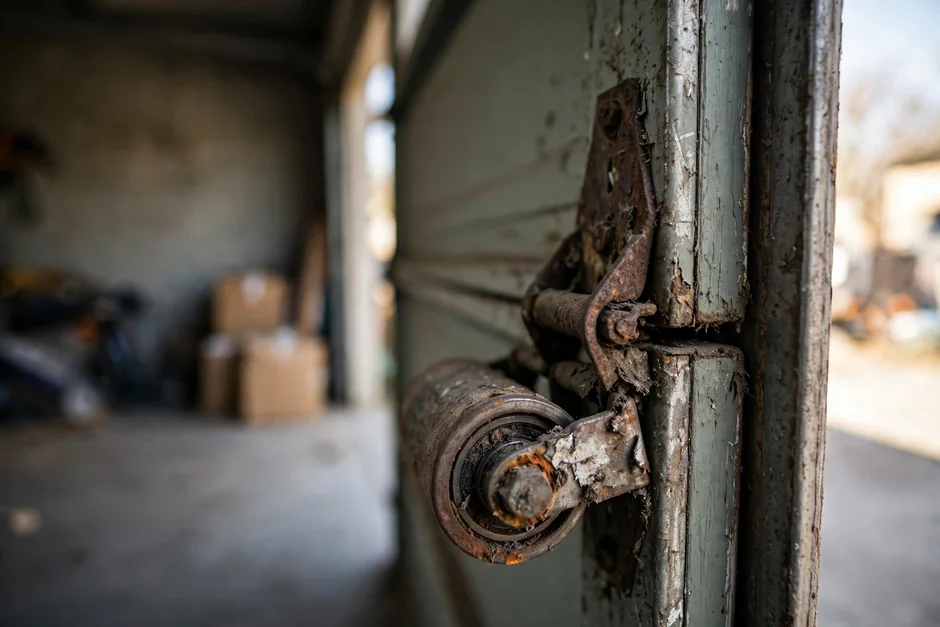
A garage door that rattles the whole house at 6 a.m. is not just annoying. It is telling you something. Most of the time it is a five-minute, $8 fix. Sometimes it is a worn part begging for retirement. Here is how to tell which one you have got.
Start with the cheapest explanation: dry rollers and hinges. Work through the noise guide below before you pay anyone anything.
What is that noise trying to tell you?
Squeaking means dry hinges or rollers. Grinding points to worn metal rollers. Rattling is almost always loose hardware. A single loud bang is a broken spring, so stop and call a pro. Thumping on the way down can mean a worn roller or a cable issue. Match your noise to the table:
| Noise | Likely cause | First move |
|---|---|---|
| Squeak or creak | Dry hinges, dry roller bearings | Silicone-based lubricant |
| Grinding | Worn steel rollers | Lubricate, then consider a roller replacement |
| Rattle | Loose bolts, nuts, brackets | Tighten hardware (snug, not stripped) |
| Single loud bang | Broken spring | Stop using the door, call a pro |
| Thump on the way down | Worn roller or cable issue | Inspect; call if the door hangs crooked |
Can I just spray WD-40 on it?
No. WD-40 is a solvent and water displacer, not a lubricant. It strips off the grease that is left, then attracts dust and grit, so the noise comes back worse within weeks. This is the most common mistake in every noisy-door thread online, and it costs people real money when dry parts wear out faster.
Use a silicone-based garage door lubricant or white lithium grease instead. Hit the hinge pivots, the roller bearings, and the springs. Never spray the tracks or the opener belt: lubricant there collects dirt and makes the door slip or strain.
The five-minute quiet-down routine
Once every few months, spend five minutes on this. It fixes the majority of noise complaints we hear about, and a $8 to $12 can lasts about six months.
- Power down: close the door, then unplug the opener or pull the emergency release so the door is manual.
- Wipe first: run a rag over the hinges, roller stems, and springs to clear grit. Lubricating over dirt just makes grinding paste.
- Lube the right spots: spray silicone-based lubricant on each hinge pivot, each roller bearing, and along the springs. Skip the tracks and the belt.
- Work it in: plug the opener back in and run the door up and down a few times so the lubricant settles into the bearings.
- Repeat 3 to 4 times a year: spring and fall at minimum, plus once in the dead of winter when metal is at its loudest. Chamberlain’s maintenance guides cover the same routine if you want a second reference.
When worn metal rollers are the real problem
If grinding survives lubrication, your rollers are done. Old steel rollers with worn bearings are the number-one fixable noise cause we see on older Brentwood doors. The steel gets pitted, the bearings go dry, and no amount of spray brings them back.
Sealed-bearing nylon rollers run dramatically quieter than steel and need far less attention. A full roller replacement is one of the best noise-per-dollar upgrades for an older door, and it pairs well with a track repair check to make sure everything is aligned while you are at it.
Noises that mean stop and call a pro
Some noises are a maintenance task. These are a stop sign:
- A single loud bang: that is a broken torsion or extension spring. Do not run the opener and do not force the door. You need a spring replacement.
- Grinding that does not improve after lubrication: the rollers or bearings are shot.
- A door that hangs crooked or jerks: this can mean a frayed cable or an off-track door, and forcing it makes the damage worse.
With any of these, stop using the door and call. A quick diagnosis beats a bigger repair bill later.
What to expect when you book
When you call Brentwood Garage Door Rescue at (615) 637-1416, whether you are in Annandale or anywhere else in Brentwood, describe the noise and when it happens. On site, the tech finds the actual cause, names the part, and gives you a written quote before work starts. Most jobs land between $129 and $399, and the price does not change mid-visit.
Frequently Asked Questions
Can I use WD-40 on my garage door? No. WD-40 is a solvent, not a lubricant. It strips the remaining grease, attracts dirt, and the noise comes back worse. Use a silicone-based garage door lubricant or white lithium grease, and never spray the tracks or the opener belt.
What is the cheapest way to quiet a noisy garage door? A $8 to $12 can of silicone-based lubricant and five minutes of your time, three or four times a year. Wipe down the hinges and rollers, lubricate the pivot points and bearings, and skip the tracks and belt.
Why does my garage door get louder in cold weather? Metal contracts and old grease stiffens in the cold, so worn rollers and dry hinges that were borderline in summer start complaining in January. A fresh lubrication pass usually settles it.
Are nylon rollers really quieter than steel? Yes. Sealed-bearing nylon rollers run noticeably quieter than old steel rollers with worn bearings, and they need less maintenance. If grinding persists after lubrication, a roller swap is the fix.
When should I call a professional about garage door noise? Call if you hear a single loud bang, if grinding does not improve after lubrication, or if the door hangs crooked. Those point to a broken spring, worn-out hardware, or a cable or track problem, not a lubrication issue.